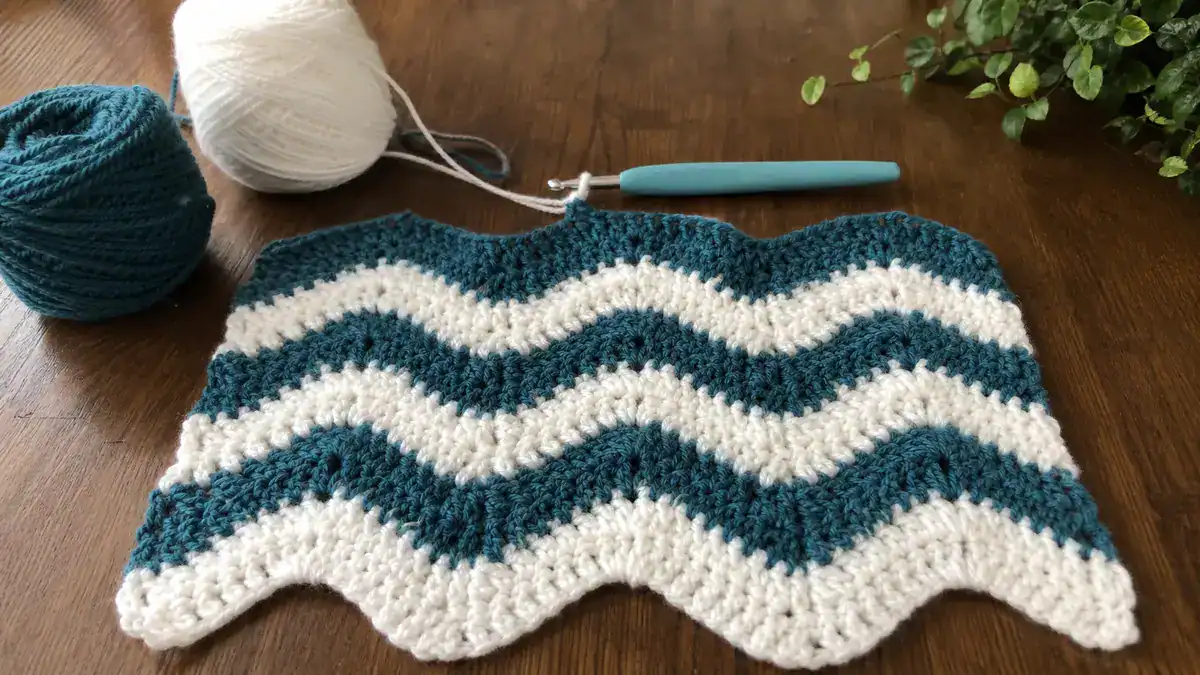
Worked in two colors the wave stitch creates a beautiful undulating design. Here’s how to do it:
Step One:
Using color A, crochet a starting chain that is a multiple of 8 st + 4. For this example I did ch 20.
Step Two:
Worked in two colors the wave stitch creates a beautiful undulating design. Here’s how to do it:
Step One:
Using color A, crochet a starting chain that is a multiple of 8 st + 4. For this example I did ch 20.
Step Two:
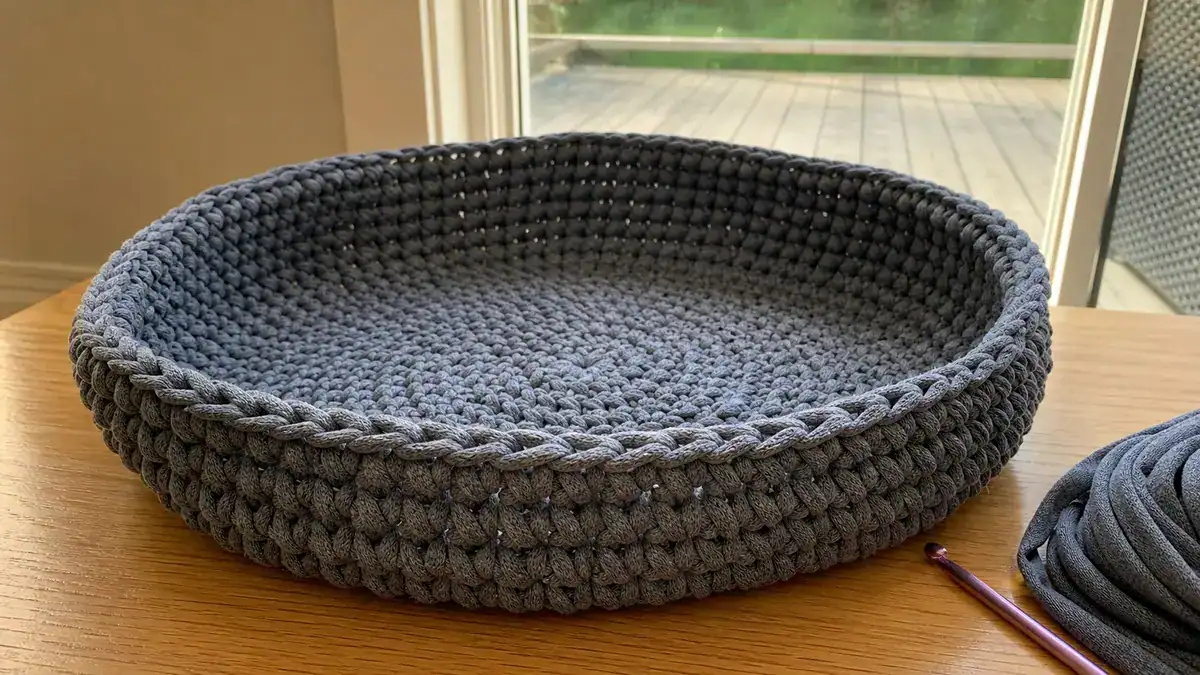
Last month I showed you photos of the T-shirt yarn bed I crocheted for Miso, a friend’s chihuahua … but I didn’t tell you how I made it. Here’s how.
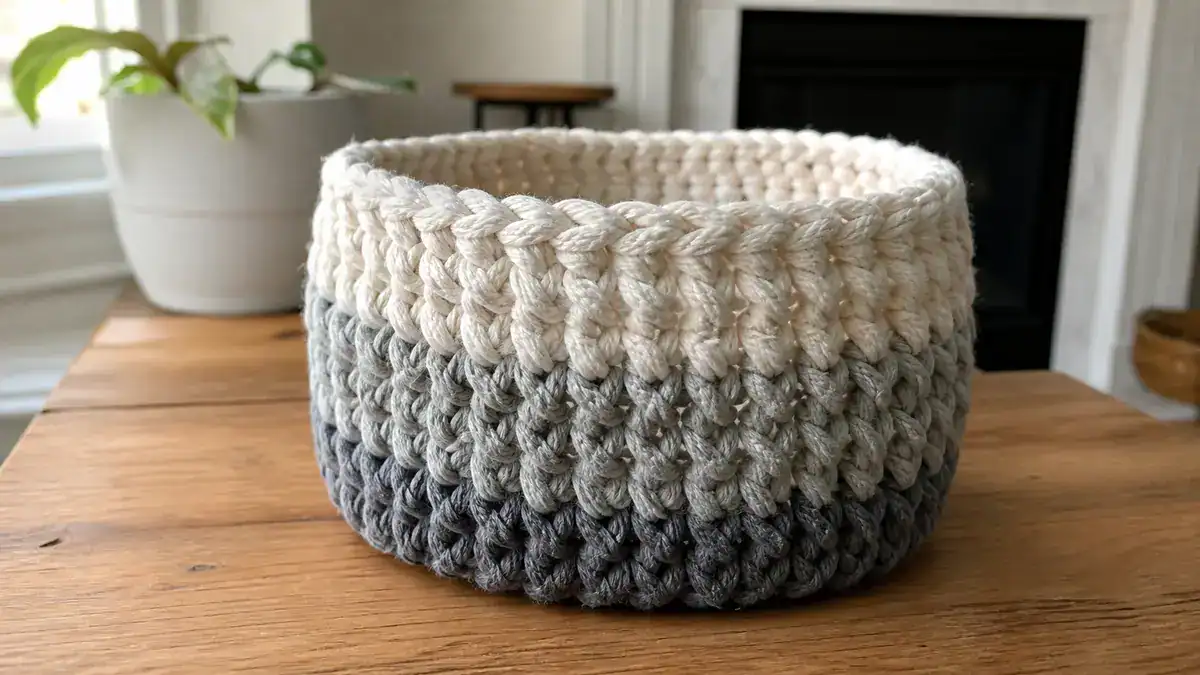
One of the best things about crochet as an art form is that you can start off with a pattern, and with subtle changes create an end product that is uniquely your own. Crochet is such a versatile craft, and I love that it offers me a chance to be creative without having to start …
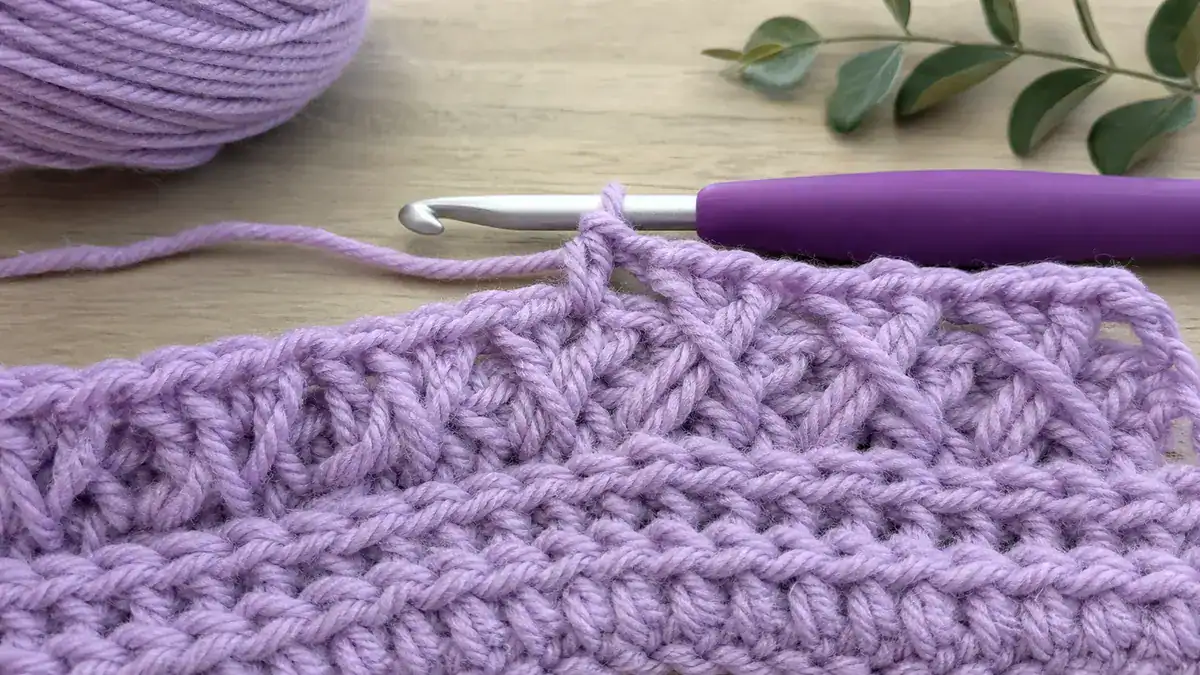
In this tutorial I will share how to crochet the crossed double crochet stitch. Then I will elaborate on how to do the same technique for the crossed treble crochet stitch.
The crossed double crochet stitch (xdc) is one of my personal favorite stitches. It seems to be a bit of a secret stitch in the sense that it’s little used and yet it’s a really easy stitch to do, requiring only basic crochet stitch skills, specifically knowledge of how to do a double crochet. It is a great decorative stitch that can work for a variety of different items. It is especially great for edgings and borders.
Step One:
Crochet a starting chain of any odd number length. The example here is a chain of 15.
Step Two:
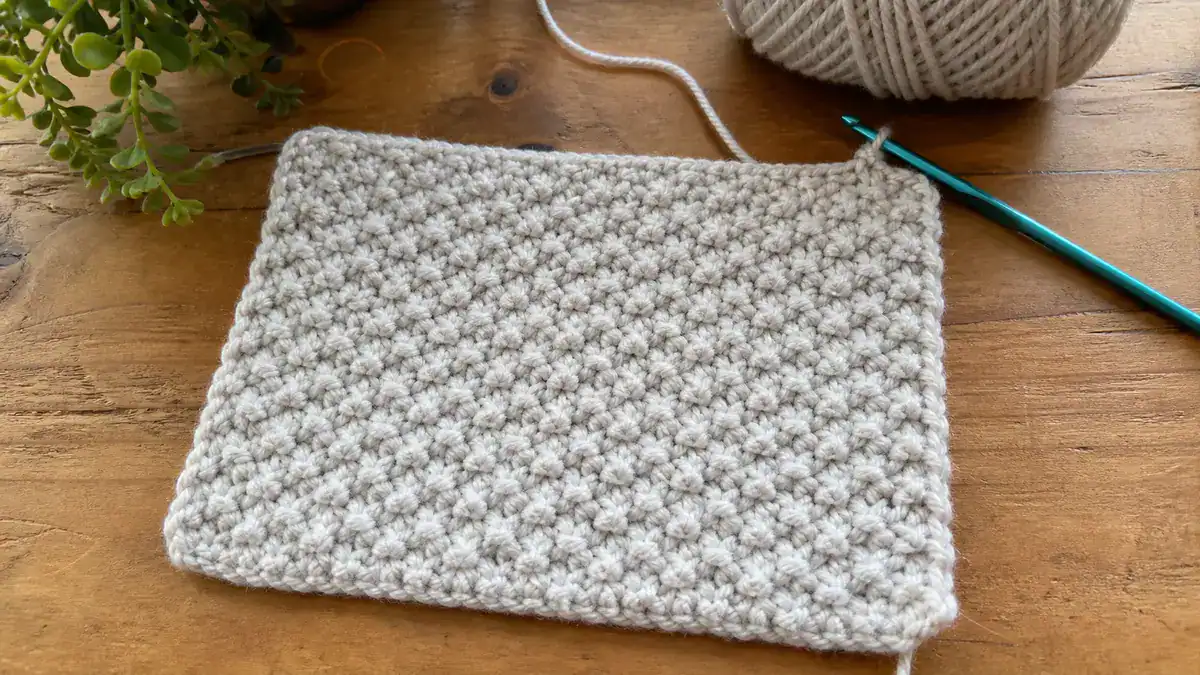
The seed stitch is a simple stitch pattern of alternating single crochet and double crochet stitches. The extended seed stitch is a variation that uses half double crochet (hdc) and treble crochet (tr) stitches instead. The pattern has a slightly more openwork design and works up more quickly than the traditional seed stitch but is still a great textured stitch for items such as scarves and washcloths.
Step One:
Crochet a starting chain. Any even numbered length will work. This example shows a starting chain of 20.
Step Two:
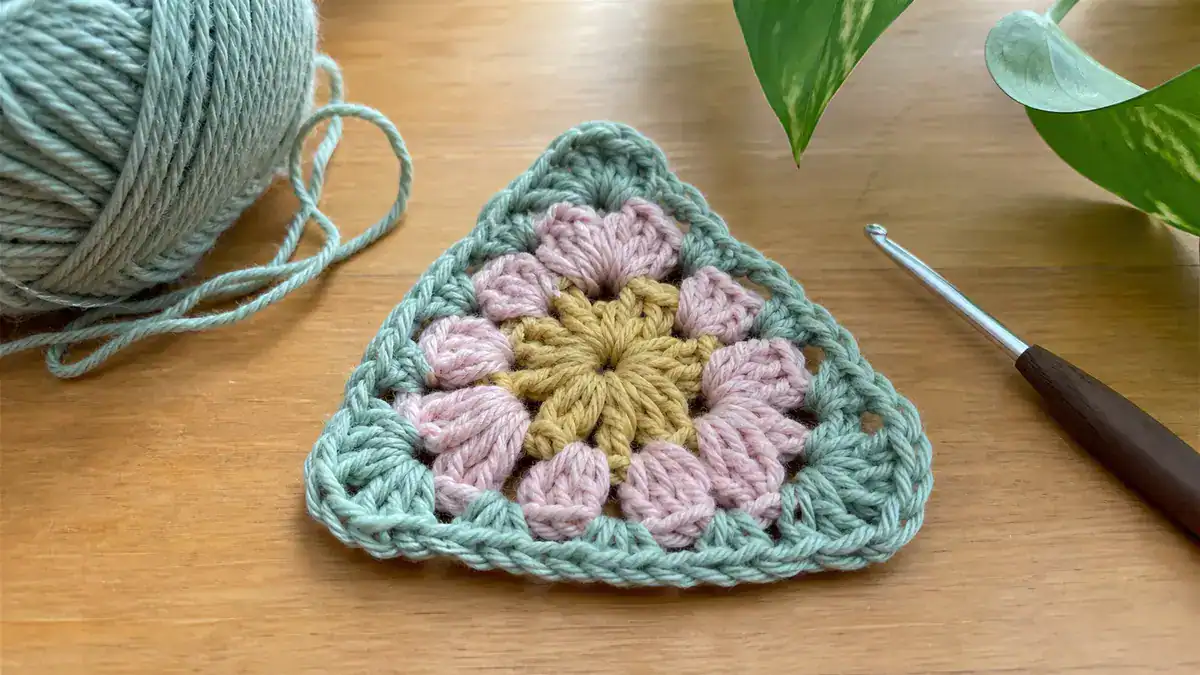
Last week I shared how to crochet a granny circle. This week I want to share another tutorial that I originally wrote for the Crochet Today blog – how to crochet a granny triangle worked in the round.
Step One:
Make a foundation chain of four stitches.
Step Two:
Close with a slip stitch to make a ring.
Step Three:
Chain 6 (counts as first dc and first corner).
Step Four:
You will be working into the center of the ring (similar to how you would start a classic granny square). Do 3 dc, chain 3.
Step Five:
Repeat Step Four.
Step Six:
One of my favorite stitch patterns is just a repeat alternating front post and back post double crochet stitches across the row. Here’s a basic crochet tutorial showing how I made a square with this technique and finished it off with a round of regular double crochet all the way around. This would make a good washcloth pattern or pattern for square motifs for a blanket.
So it starts with a foundation chain of even-numbered crochet stitches.
Then a row of regular double crochet (still an even number).
Then turn and chain two.
Then fpdc, bpdc across the entire row.
End with a regular double crochet in the second stitch of the final double crochet from the row below. (I do this instead of into the top of the double crochet because it makes the ends even in height with the post stitches.)
Repeat steps 3-5 for as many rows as you want. Always work a front post into a front post and a back post into a back post.
This is the pattern that I’ve used to make various post stitch crochet projects that I’ve showcased here on the blog in the past. In the case of this particular square, I just added the border of regular dc all the way around.
You can opt out of sale/share style tracking and optional advertising pixels on this site. Our programmatic ad partners may also provide their own ad privacy controls, which we do not replace.
If your browser sends a Global Privacy Control signal, this site treats that as an opt-out request for optional tracking we control.