By Becky Stahl
Have you ever put down a project thinking you'll remember all of the details… the yarn you used, the hook you used, or even what pattern you were using? In the past, when I worked on a project and put it down for a while, I would always forget either what yarn I used, what hook I used, or, sometimes, I couldn't even remember what pattern I used, or, if I remembered that, I couldn't remember where I left off.
Don't lose this article. Enter your email below, and I'll send it to you right now. Plus a little crochet inspiration from me, straight to your inbox.
I can barely remember the names of all 5 of my kids half the time, so I don't know what made me think I'd remember all of those important details.
A Friend's Dry-Erase Trick for Holding My Spot
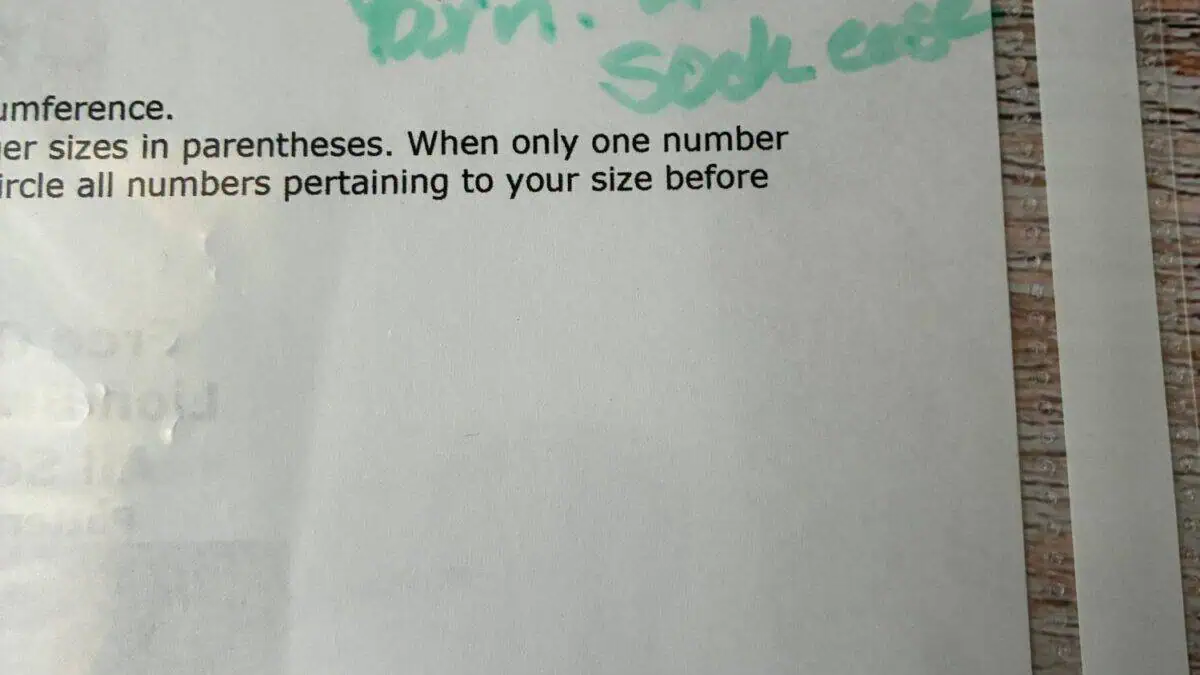
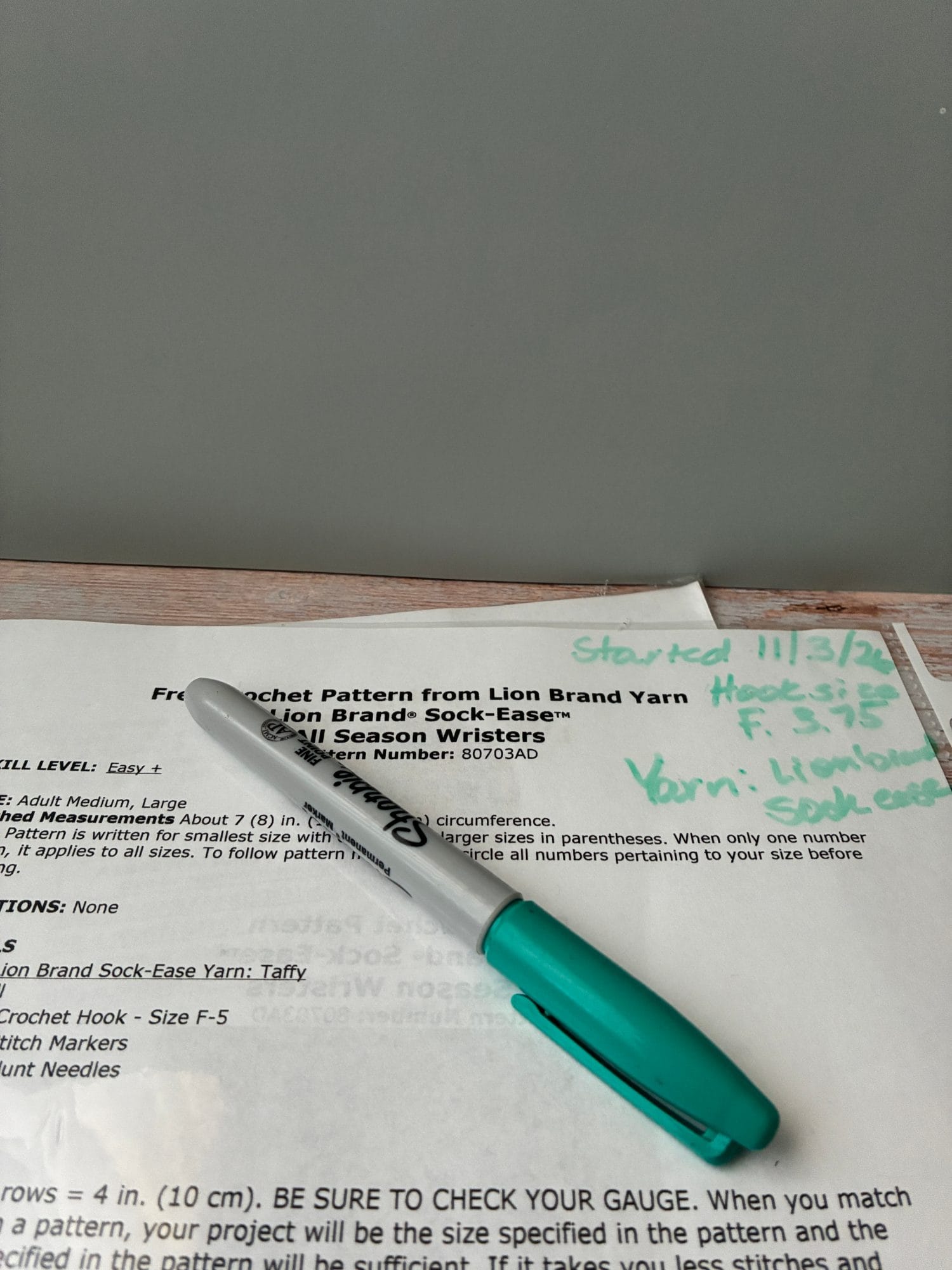
I have a good friend who told me her method for keeping her place in projects. She prints out her pattern and puts the pages in sheet protectors, then she'll take a dry-erase marker and mark where she's at on the pattern.
Then she always knows where she is at. I decided to try her idea. Because even though I think I'll remember important details, I never do.
The Hook Size I Couldn't Remember
Recently, I picked back up my granny ripple throw that I've been working on all year. It is a gift for my daughter. I have the pattern memorized, but I could not remember what size hook I had used.
Luckily, I had written that down and kept it with the project in a bag. I was so glad that I had done that. It saved me a lot of aggravation.
Because if I had used the wrong size hook, that could have made the blanket look odd.
Don't lose this article. Enter your email below, and I'll send it to you right now. Plus a little crochet inspiration from me, straight to your inbox.
Keeping Notes in the Bag With the Yarn
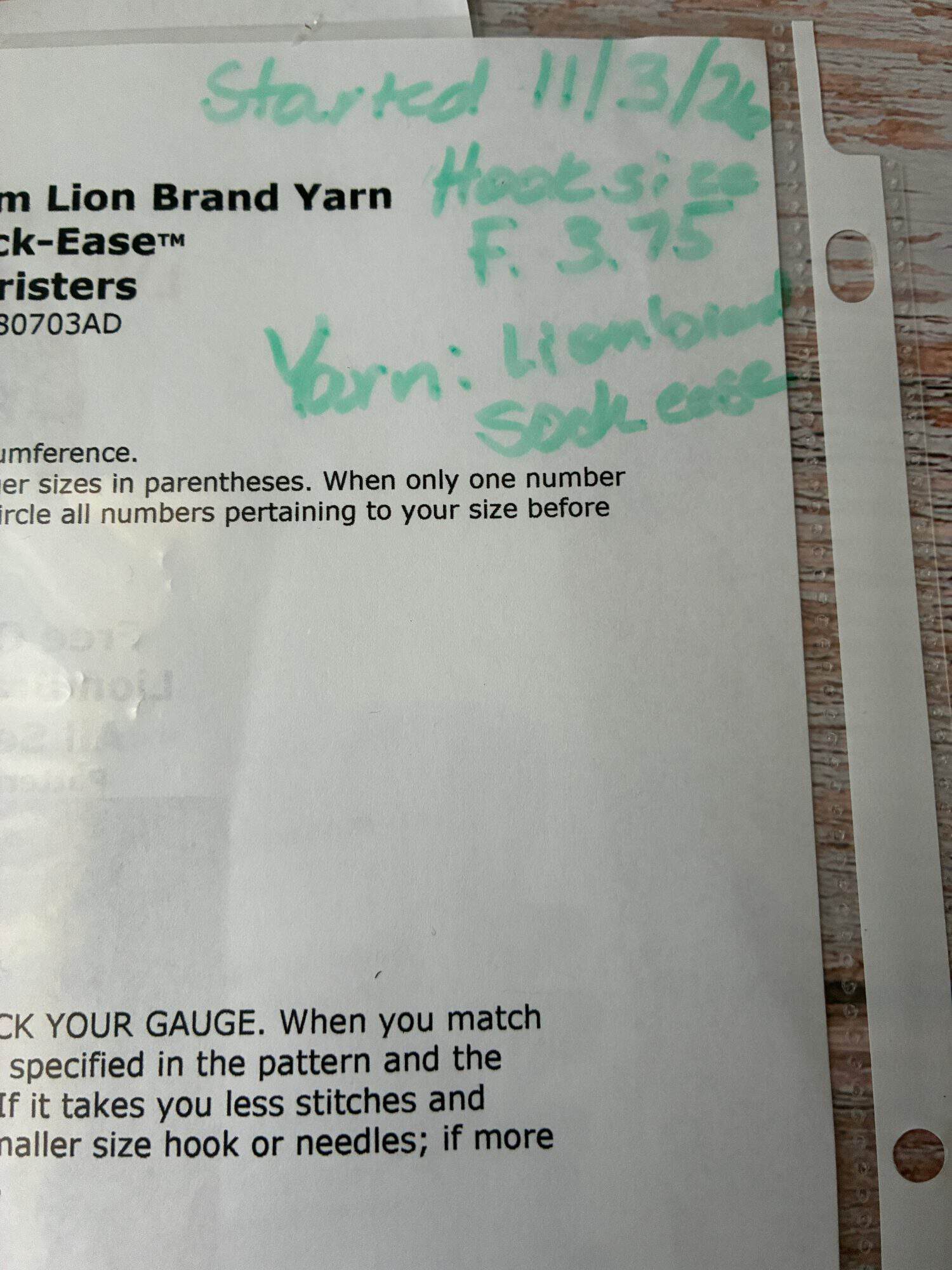
I've taken that a step further. If I put the project down, I will keep the pattern that's in the sheet protectors and keep it in a bag or box with the project, along with notes about what type of yarn and hook size I use. I just write that with dry erase on the sheet protector.
Then I know exactly what is needed to resume the pattern again. Once I'm done, I can just take a damp cloth and wipe the plastic, and it's clean again.
Journals, Ravelry, and Other Ways to Track Projects
I think it's great to keep notes. A project diary of sorts, a journal, or just keeping notes. I've seen many methods for doing this.
Some people have a project journal that they keep. Elise Rose has a crochet & knitting journal that you can download and print for free. Here is the link: eliserosecrochet.com
There are so many great resources online for keeping track of your projects.
Also, there are apps that can help you keep track. Ravelry has a project section where you can keep track of your progress; another idea is a spreadsheet with all of the relevant information.
I hope this helps. Best of luck to you with your crochet projects this week!